
By Martin Sharratt, Managing Director, AP Technologies
3D depth sensing is increasingly embedded within OEM product architectures rather than treated as a peripheral feature. Across industrial automation, robotics, intelligent access systems and applied research instrumentation, reliable depth measurement is now defined at system specification stage. As depth sensing becomes a standard requirement, the method by which depth is obtained influences mechanical design, processing allocation and compliance planning.
For this reason, technologies such as Time-of-Flight (ToF) imaging are evaluated earlier in the development cycle. Rather than being a question of sensor preference alone, the depth acquisition approach has structural implications for how predictable integration will be once enclosure geometry, electronic architecture and validation schedules have been committed.
Key Takeaways for Time-of-Flight Camera Integration
- Acquisition model affects integration risk.
Depth reconstruction systems (stereo, structured light) introduce mechanical alignment, environmental sensitivity and computational dependencies that must be managed once architecture is fixed. - Time-of-Flight cameras measure depth directly at each pixel.
This reduces reliance on stereo baselines and projected pattern geometry, simplifying tolerance management in compact OEM systems. - Quantified performance defines architectural feasibility.
Working range (0.2–7 m), <±1% accuracy at 2.5 m, VGA resolution and controlled power envelopes (1.5–2.5 W) allow predictable processor, thermal and enclosure planning. - Integration predictability extends beyond depth accuracy.
Interface standards (MIPI / USB), operating temperature limits and IEC 60825-1:2014 Class 1 classification influence system-level compliance and validation scope. - Early evaluation reduces downstream risk.
Verifying field of view, ambient light robustness, processing load and thermal behaviour before tooling lock reduces cost and certification exposure.
- Production-ready module variants support predictable time-of-flight camera integration.
CubeEye board-level and system-ready configurations enable compact 3D sensing within constrained mechanical envelopes.
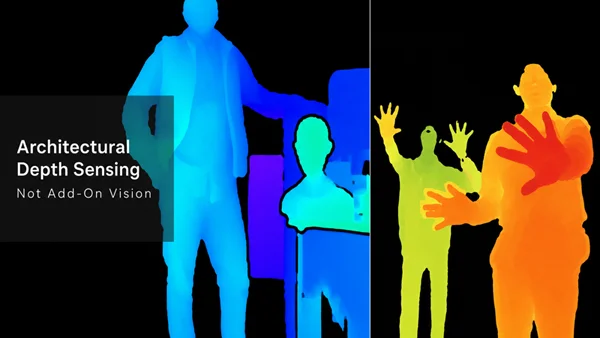
Designing 3D vision into a product at system level introduces technical demands. Mechanical tolerances, calibration stability, ambient light variation and computational load all affect integration predictability. When depth sensing is embedded at architectural level, dependencies must be addressed at specification stage. If deferred or treated as peripheral, they can translate into cost, delay and compliance exposure.
The central consideration therefore becomes architectural dependency. Different depth acquisition models create different integration burdens.
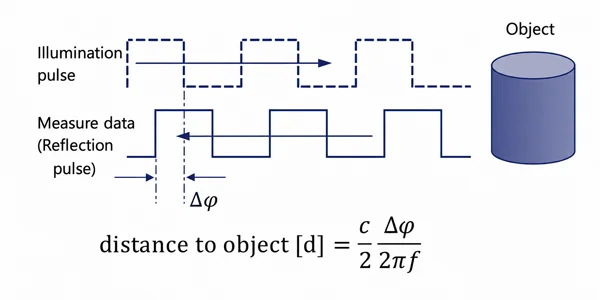
Time-of-Flight imaging provides a fundamentally different approach to 3D measurement compared with reconstruction-based methods such as stereo and structured light. Distance is determined directly at each pixel by emitting modulated infrared light, typically at 850 nm or 940 nm, and calculating the phase shift (indirect, CW or correlated time-of-flight) or time delay (direct time-of-flight) of the returned signal. Depth is measured rather than reconstructed. This distinction reduces reliance on stereo baselines, dual-camera alignment and projected optical geometries, shifting complexity away from mechanical precision toward controlled optical emission and signal processing within a defined module.
In embedded systems where enclosure volume, processing capacity and thermal behaviour are constrained, reducing mechanical and algorithmic interdependency supports more predictable architectural outcomes.
Depth Reconstruction vs Direct Measurement
Several depth sensing technologies are used in embedded systems, each based on a different acquisition principle. The method by which depth is obtained has direct implications for mechanical stability, environmental robustness and computational demand.
- Stereo vision systems reconstruct depth by comparing two spatially separated camera images and calculating disparity. Accuracy depends on stable mechanical alignment and sufficient scene texture. Variations in alignment or scene conditions influence reconstruction performance, and depth must be computed rather than measured directly.
- Structured-light systems project a defined optical pattern onto the scene and analyse its deformation to determine distance. Performance depends on maintaining contrast between the projected pattern and ambient illumination.
- Time-of-Flight systems emit infrared light and calculate phase shift or time delay at each pixel to determine distance. Depth is measured directly rather than reconstructed, reducing reliance on stereo baselines or projected pattern geometry.
Each approach can deliver accurate 3D data. The distinction lies not only in achievable precision, but in how much mechanical alignment, environmental compensation and computational reconstruction must be managed once sensing is embedded within fixed architecture. In many systems, stability and predictability of performance under defined operating conditions are often as important as peak accuracy.
The diagram below illustrates indirect Time-of-Flight measurement showing modulated illumination pulses, reflected signal delay, phase difference (Δφ), and distance calculation formula.
Compact Module Integration
When depth sensing is defined at architectural level, physical footprint, operating envelope and electrical interface influence overall system feasibility. The acquisition model must translate into a module that fits within defined mechanical, thermal and power constraints.
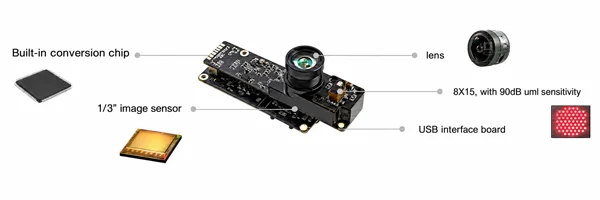
CubeEye Time-of-Flight cameras are configured as compact integration-ready modules suitable for embedded deployment and system-level evaluation. The direct-measurement ToF architecture is contained within defined optical, thermal and electrical parameters, enabling early-stage validation against enclosure geometry and processing budgets.
CubeEye Time-of-Flight Module Specifications
| SCAN MODE |
S-CUBE S111D |
I-CUBE I200D |
| Nominal working range | 0.2m – 5m | 0.25m – 7m |
| Typical depth accuracy | < ±1% @ 2.5m | < ±1% @ 2.5m |
| Resolution | 640 × 480(VGA) | 640 × 480(VGA) |
| Frame rate range | 7.5 – 30fps | 5 – 15fps |
| Operating temperature |
0 – 40°C |
5 – 55°C |
| Average power consumption | ~1.5W | ~2.5W |
| Optical safety classification | IEC 60825-1:2014 Class 1 | IEC 60825-1:2014 Class 1 |
These parameters define the architectural envelope within which the depth subsystem operates. Working range and accuracy determine optical placement and application suitability. Resolution and frame rate influence bandwidth allocation and processor selection. Operating temperature and average power consumption shape enclosure and thermal strategy. Confirmed IEC 60825-1:2014 Class 1 classification supports structured optical safety planning within regulated environments.
The S-Cube S111D, based on the Samsung LSI S5K33DXX sensor, is a board-level module providing VGA 640 × 480 pixel 3D output with a 90° × 68° field of view and frame rates up to 30 fps. Its form factor supports direct PCB-level integration where enclosure depth and mounting volume are limited.
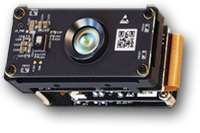
The I-Cube I200D uses an Infineon ToF sensor and provides a slim, system-ready configuration intended to reduce mechanical redesign in existing platforms. It offers the same 90° × 68° field of view with frame rates of 5, 10 and 15 fps. Its low-profile format reduces structural modification and associated validation effort.
Managing Cost, Delay and Compliance Exposure
When depth sensing is embedded at system level, issues identified during verification can require modification after architectural decisions have been committed, increasing validation effort and placing pressure on cost and delivery schedules.
Infrared-based systems incorporating active illumination are subject to optical safety classification requirements. Emission levels, wavelength selection and exposure characteristics influence safety categorisation and documentation. While conformity remains the responsibility of the OEM, selecting a module tested to IEC 60825-1:2014 Class 1 supports more predictable certification planning.
Time-of-Flight systems do not remove the need for compliance assessment. However, because depth is measured directly and emission characteristics are contained within a defined optical architecture, fewer mechanical and algorithmic dependencies must be controlled during validation.
Evaluation and Architectural Alignment
Because depth sensing influences mechanical, electronic and compliance decisions, evaluation at proof-of-concept stage should precede architectural commitment.
Assessment should include:
- Field-of-view coverage relative to enclosure geometry
- Depth stability under expected ambient lighting conditions
- Computational load on the target embedded platform
- Thermal behaviour within representative housing constraints
Characterising these variables before tooling and firmware architecture are fixed reduces the risk of post-verification mechanical or electronic revision.
Conclusion
As 3D depth sensing becomes embedded within OEM architectures, the acquisition model directly influences integration risk. Reconstruction-based approaches introduce mechanical and environmental dependencies that must be controlled once system design is fixed.
Time-of-Flight imaging measures distance directly at each pixel, reducing reliance on alignment precision and projected pattern stability. When delivered within defined operating ranges, controlled power envelopes and IEC 60825-1:2014 Class 1 emission limits, this approach supports predictable integration within constrained mechanical and thermal architectures.
CubeEye Time-of-Flight cameras combine quantified accuracy, compact form factors and integration-ready interfaces, enabling OEMs to incorporate 3D sensing with minimal architectural disruption. You can read more about our supplier CubeEye and their cameras on the supplier page.
| To find out more about CubeEye Time-of-Flight Cameras and how they could be the 3D imaging solution you need contact Martin at AP Technologies |
Frequently Asked Questions
Q: What is time-of-flight camera integration?
A: Time-of-flight camera integration refers to embedding a ToF depth sensing module within a system’s mechanical, electronic and software architecture. This includes defining optical placement, power allocation, processing bandwidth, thermal management and compliance considerations at specification stage rather than after enclosure and platform decisions have been fixed.
Q: How does a time-of-flight camera differ from stereo vision?
Stereo vision reconstructs depth by comparing two camera images and calculating disparity. Accuracy depends on stable mechanical alignment and scene texture.
Time-of-Flight cameras emit modulated infrared light and calculate phase shift or time delay at each pixel to measure distance directly. This reduces reliance on stereo baselines and projected pattern geometry, which can simplify integration within constrained enclosures.
Q: Are time-of-flight cameras more accurate than other depth sensing methods?
A: Accuracy depends on working range, environmental conditions and system design. High-end stereo or structured-light systems can achieve very high precision under controlled conditions.
Time-of-Flight cameras provide direct, pixel-level distance measurement within defined operating ranges. For embedded production systems, predictable and stable accuracy across expected environmental conditions is often as important as peak laboratory precision.
Q: What integration factors should be evaluated before committing to a ToF module?
A: Key evaluation considerations include:
- Field-of-view coverage relative to enclosure geometry
- Depth stability under expected ambient lighting
- Computational load on the target processor
- Thermal behaviour within housing constraints
- Optical safety classification and documentation
Characterising these factors before tooling and firmware architecture are fixed reduces the risk of later mechanical or electronic revision.
Q: Do time-of-flight cameras require optical safety certification?
A: Active infrared illumination systems are subject to optical safety classification standards such as IEC 60825-1:2014.
While overall conformity remains the responsibility of the system manufacturer, selecting a module tested to IEC Class 1 supports structured compliance planning and documentation during product certification.
Q; When should time-of-flight integration be evaluated during development?
A: Depth sensing should be evaluated during proof-of-concept or early architectural design. Treating it as a late-stage addition can introduce mechanical, computational and compliance dependencies that are more costly to resolve once enclosure tooling and validation schedules are committed.