
By Martin Sharratt, Managing Director, AP Technologies
As sensing systems push toward tighter detection limits and higher measurement stability, the limitations of conventional LED light sources become increasingly apparent. Broad emission spectra, temperature-driven wavelength drift, and limited modulation capability can directly constrain signal-to-noise ratio and filtering performance in spectroscopy and gas sensing applications.
VCSEL (Vertical-Cavity Surface-Emitting Laser) technology addresses these constraints by providing narrow spectral linewidth, improved thermal stability, and high-speed modulation capability within a compact footprint. When implemented as a VCSEL-based optical engine, combining the emitter, drive control, thermal management, and optical coupling strategy, the result is a more stable and controllable light-source subsystem.
For precision instrumentation, this shift from a discrete LED emitter to a VCSEL optical engine can materially improve spectral purity, environmental robustness, and measurement repeatability. Achieving those gains, however, requires careful consideration of linewidth behaviour, current density optimisation, thermal design, and packaging format early in the system architecture.
Key Takeaways
- Precision over flood illumination. While LEDs are suitable for wide-area lighting, VCSELs offer the narrow spectral linewidth (1–2nm) and symmetrical beam profile required for high-accuracy sensing.
- Thermal and spectral stability. A typical VCSEL wavelength shift of just 0.07nm/K simplifies system design by reducing the reliance on intensive active cooling and complex software compensation.
- High-speed temporal resolution. The ability to support modulation in the GHz range with nanosecond rise times makes VCSELs the primary choice for millimetre-accurate 3D mapping and direct Time of Flight (dToF) applications.
- The "overhead" philosophy. Selecting a light source with a high chip-level peak power –such as an 8W-class die – and operating it at a stable 2.7W "sweet spot" ensures maximum efficiency and long-term reliability.
- Strategic supply security. Moving to partners such as IMM Photonics and Edison Opto provides a reliable roadmap for OEMs facing end-of-life notices from traditional semiconductor suppliers.
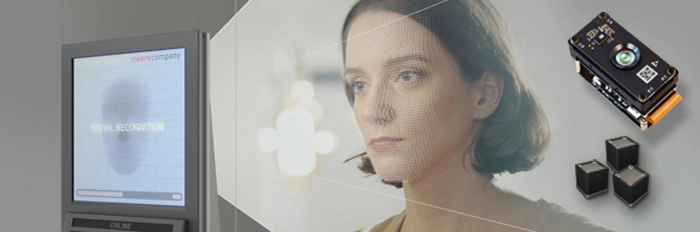
The Architecture of Precision: Choosing the Right Emitter
While infrared LEDs remain a cost-effective and technically sound choice for general illumination or wide-area proximity detection where a "flood" of light is required, the vertical-cavity surface-emitting laser (VCSEL) is the differentiated choice for precision-driven applications. A VCSEL emits light perpendicular to the chip surface from a circular aperture, producing a narrow, symmetrical beam that is significantly easier to manipulate with micro-optics than the broad emission of a standard LED.
The primary technical advantage is found in the spectral linewidth. While a standard infrared LED might have a spectral bandwidth of 20nm to 30nm, a VCSEL narrows this to just 1nm to 2nm. For the system designer, this narrow linewidth allows for the use of ultra-narrow bandpass filters on the receiver side. By blocking out ambient noise, such as direct sunlight or overhead industrial lighting, while allowing the specific wavelength of the emitter to pass, the signal-to-noise ratio (SNR) is improved without increasing the power draw of the emitter.
Precision in Industrial and Laboratory Environments
In advanced manufacturing and life sciences sectors, the "optical budget" is often the limiting factor for system reliability. In laboratory instrumentation, such as high-accuracy gas analysers, the spectral stability of the light source is significant. For example, the detection of trace oxygen levels relies on a specific absorption line at 760nm. A VCSEL provides the necessary spectral purity to target this wavelength precisely, reducing false readings and improving the limits of detection in environmental monitoring.
In warehouse automation and last-mile delivery, the efficiency and beam quality of the VCSEL are significant. For autonomous mobile robots (AMRs) operating in complex, high-traffic warehouse and increasingly in public environments, the ability to direct light into a precise field of view ensures that sensing energy is not wasted. This efficiency allows for longer operational windows between charges – an important metric for the productivity of automated logistics hubs.
Industrial, Automotive and Aerospace: Thermal Stability
In industrial, automotive and aerospace applications, thermal stability is a significant differentiator. The wavelength of a VCSEL typically shifts by no more than approximately 0.07nm/K. This stability ensures that the emitter remains within the pass-band of the receiver filter even as the internal temperature of a robotic sensor or industrial monitor rises during operation. This predictability reduces the need for intensive active cooling or complex software compensation, a factor that is particularly significant when it comes to designing the small-form-factor modules increasingly required OEM product development.
Beyond thermal stability, the security and surveillance landscape in the UK is being reshaped by new legislation. Known as Martyn’s Law, the Terrorism Protection of Premises Act 2025, for example, mandates that public venues enhance their security infrastructure. This is driving a requirement for AI-integrated thermal imaging and smart IR surveillance,
High-Speed Modulation and 3D Mapping
 The rise of autonomous mobile robots (AMRs) and gesture-based interfaces has made modulation speed a primary requirement. In Time-of-Flight (ToF) applications, the accuracy of the depth map depends on the precision of the pulse profile. While some light sources produce pulses with "soft" rise times or signal jitter that can blur timing measurements, VCSELs support modulation rates in the MHz to GHz range.
This speed is what enables high-resolution 3D mapping by generating sharp, well-defined pulses with nanosecond rise and fall times. Whether it’s a drone maintaining altitude or a robotic arm avoiding a moving obstacle, the temporal resolution of the light source determines the reaction time of the entire system. Without the high-quality pulse edges provided by a VCSEL, the depth map generated by the sensor would lack the sharpness required for safe autonomous navigation.
The "8W Engine": Engineering for Longevity
System reliability relies on distinguishing between peak chip capability and sustained performance. Operating an 8W-class die at 1.5A to achieve 2.7W provides the efficiency and thermal stability required for long-term use.
This "8W engine at 2.7W " configuration offers the headroom needed to prevent optical decay and thermal bottlenecks – a design philosophy central to the Edison Opto high-power range. By maintaining a robust safe operating area (SOA) rather than pushing components to their absolute limits, this inherent design margin is significant for ensuring consistent performance and reliability throughout the product life cycle.
The Optical Engine: Reliability and Integration
Moving from a bare semiconductor chip to a production-ready module involves overcoming significant packaging challenges. The industry is moving away from simple component supply toward the concept of the "optical engine". This involves integrating three core elements to ensure system-level performance:
- Thermal management. Wavelength stability is dependent on temperature. Integrating thermoelectric coolers (TEC) or specialised heat-sinking ensures the laser stays on-spec in fluctuating industrial environments.
- Micro-optics integration. Aligning a lens to a laser at the micron level is difficult in high-volume assembly.
- Reliability through burn-in. To ensure long-term stability, particularly in clinical or safety-significant industrial applications, components must undergo an elevated-stress burn-in process. This identifies and eliminates early-life failures at the factory, ensuring predictable behaviour throughout the product's life cycle.
Strategic Sourcing and Portfolio Expansion
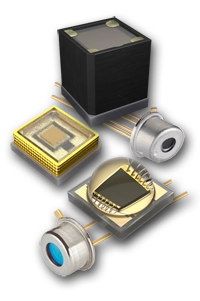 The transition away from traditional light sources is often accelerated by end-of-life (EOL) notices from major semiconductor manufacturers. To address these technical and commercial challenges, AP Technologies has expanded its portfolio to provide a dual-track solution for the UK market.
For high-precision industrial and medical applications, our partnership with IMM Photonics provides a German-engineered platform focused on stability. Their 850nm single-mode VCSELs are designed for reproducibility, featuring polarisation-locked emission to simplify downstream optical design. For specialised diagnostics, their 760nm variant is optimised specifically for high-accuracy oxygen sensing.
For industrial and high-volume sectors, Edison Opto offers the necessary scale and versatility. Their portfolio covers everything from low-power CW devices (3–7mW) for smart door locks to high-power emitters for robotic vision. A standout is the EDTOF series – a dToF module capable of detection distances up to 5000mm. This module integrates a 940nm VCSEL with advanced SPAD (single-photon avalanche diode) architecture, providing a complete sensing solution for robotics and smart security.
Navigating the Transition
Moving to a VCSEL architecture or switching vendors in the interests of supply chain security requires more than just a replacement part number. For system development engineering teams, navigating these technical shifts while maintaining system performance and long-term reliability can be a major challenge.
AP Technologies specialises in bridging the gap between a technical datasheet and successful system integration. We provide the technical support, evaluation samples, and cross-referencing data required to ensure a seamless transition. By partnering with experts who understand the nuances of the "optical engine", from polarisation locking to thermal drift, you ensure your next product generation is built on a foundation of spectral purity, efficiency, and security.
The right time to evaluate your light source strategy is before a performance ceiling or a supply crisis forces the issue. Explore our full range of VCSEL components or contact the AP Technologies team today to request a technical review of your current sensing architecture.
| To discuss how VCSELs could work for you contact Martin at AP Technologies |
Frequently Asked Questions
Q: What is the primary advantage of a VCSEL over an infrared LED?
A: The main advantage is spectral purity. A VCSEL has a much narrower linewidth (1–2nm compared to 20–30nm for an LED), which allows for tighter filtering at the receiver. This significantly improves the signal-to-noise ratio in environments with high ambient light.
Q: Why does the "8W" Edison VCSEL have a recommended output of 2.7W?
A: The 8W figure denotes the maximum peak power of the chip (die level). Operating at 2.7W (typically at 1.5A) represents the "sweet spot" for efficiency and thermal stability. Using an 8W-class die at lower power levels provides the overhead needed for long-term reliability and minimises aging effects associated with pushing components to their absolute limits.
Q: What does "MT" stand for in Edison Opto datasheets?
A: "MT" stands for Moulding Type. This refers to the package design, typically featuring a two-pad layout that is optimised for high-volume automated assembly.
Q: Can VCSELs be used as direct drop-in replacements for existing designs?
A: Yes. The ranges from IMM Photonics and Edison Opto include models designed specifically as high-performance alternatives for components from manufacturers such as Trumpf, ULM and ams-OSRAM.
Q: What is Self-Mixing Interference (SMI)?
A: SMI is a technique where the VCSEL acts as both the light source and the detector. Reflected light interferes with the laser cavity, allowing the system to track movement or vibration with sub-wavelength precision without needing an external photodiode.