
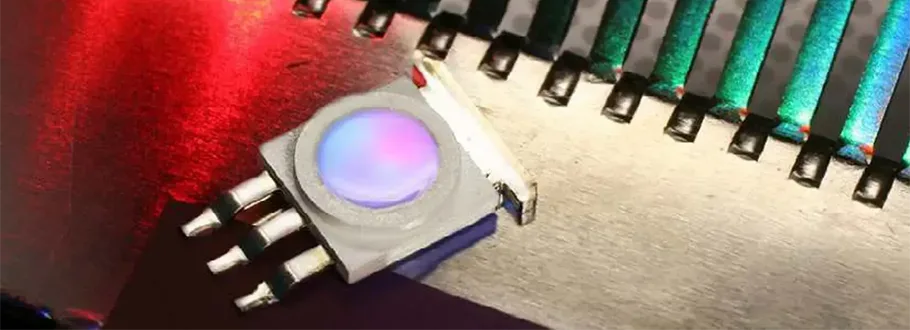
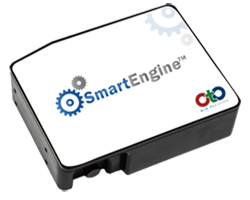
 Our range of spectrometers, manufactured in Taiwan by OtO Photonics, covers the spectrum from 180nm to 1100nm using silicon sensors (CMOS or CCD) as well as the 900-1700nm range with InGaAs; plus 910-2200nm and 900-2500nm using extended-response InGaAs linear sensors.
To help our customers understand and utilise our spectrometers we have produced a number of support resources covering aspects such as:-
- How to Specify SmartEngine - and other products within the range
- Recommended SmartEngine model by Application
- Spectrometers for Deep UV (DUV) Applications
- Spectrometers for DUV to Near Infrared (NIR) Applications
- Spectrometers for NIR Applications
- Spectrometers for Raman Applications
- Software Development Kit (SDK)
This information can be found via the links to the right of this page or from the main menu at the top.
The information provided is for guidance and is not intended to be exhaustive so please Contact APT if you have any questions.
OtO Photonics supply a Software Development Kit (SDK) which supports C++ , VB6 , c# , VB.net , Delphi , Python and LabVIEW on Windows.
The SDK support document provides users with guidance on all aspects of interfacing to OtO's spectrometers and allows development of application specific control software.
The "Application and Measurement Development Flow Chart" describes tasks such as Spectrum Collection, Absorbance Measurement; Transmission & Reflectance Measurement; Colour Measurement and Trigger Flows.
There is also a comprehensive set of API Function Instructions covering all aspects of spectrometer operation and which includes Error Codes.
 |
Software Development Kit user manual |
OtO are very happy to work with OEM customers to assist in the development of application specific software so please
OtO Photonics have identified a number of combinations of SmartEngine sensor, grating and slit which have proven a good solution for particular applications.
| Application | Model Name |
Wavelength Range (nm) |
Slit Size (µm) |
Resolution (nm) |
SNR | Exposure Time |
Dynamic Range |
Thermal Stability (nm/°C) |
| LED Testing | SE2020 | VNIR (350-1020) |
50 | 1.9 | 250 | 1ms - 65s | 1300 | 0.027 |
| Water Quality Analysis | SE2020 | FUV (180-850) |
50 | 1.9 | 250 | 1ms - 65s | 1300 | 0.027 |
| Blood Analysis | SE2020 | 300-850 | 200 | 6 | 250 | 1ms - 65s | 1300 | 0.027 |
| DNA Analysis | SE2020 | FUV (180-850) |
50 | 1.9 | 250 | 1ms - 65s | 1300 | 0.027 |
| Raman Detection | SE2050 | VNIR (350-1020) |
25 | 1.2 | 500 | 5ms - 65s | 5000 | 0.027 |
| Air Analysis | SE2020 | 200-400 | 25 | 0.5 | 250 | 1ms - 65s | 1300 | 0.015 |
| Educational | SE2040 | VNIR (350-1020) |
25 | 1.2 | 200 | 1ms - 65s | 1000 | 0.027 |
| Film Thickness Measurement |
SE2060 | FUVN2 (180-1100) |
50 | 2.3 | 500 | 5ms - 65s | 5000 | 0.039 |
| Solar Panel Measurement |
SE2060 | FUVN2 (180-1100) |
50 | 2.3 | 500 | 5ms - 65s | 5000 | 0.039 |
| Fluorescence Detection | SE2020 | 340-850 | 200 | 6 | 250 | 1ms - 65s | 1300 | 0.027 |
| Gem Stone Examination | SE2020 | 400-500 | 25 | 0.25 | 250 | 1ms - 65s | 1300 | 0.027 |
| Food Analysis | SE2020 | FUVN (180-1100) |
50 | 2.3 | 250 | 1ms - 65s | 1300 | 0.039 |
| OCT Applications | SE2080 | NIR1 (790-1010) |
25 | 0.5 | 330 | 0.4 - 10ms | 1600 | 0.027 |
Alternatively models are recommended based on commercial or technical criteria:-
| Criteria | Model Name |
Wavelength Range (nm) |
Slit Size (µm) |
Resolution (nm) |
SNR | Exposure Time |
Dynamic Range |
Thermal Stability (nm/°C) |
| Most Sold | SE2020 | VNIR (350-1020) |
50 | 1.9 | 250 | 1ms - 65s | 1300 | 0.027 |
| Lowest Cost | SE2040 | VNIR (350-1020) |
25 | 1.2 | 200 | 1ms - 65s | 1000 | 0.027 |
| Full Wavelength (180-1100nm) |
SE2020 | FUVN | 50 | 2.3 | 250 | 1ms - 65s | 1300 | 0.039 |
| SE2060 | FUVN2 | 50 | 2.3 | 500 | 5ms - 65s | 5000 | 0.039 | |
| Highest SNR |
SE2050 | FUVN | 50 | 2.3 | 500 | 5ms - 65s | 5000 | 0.039 |
| SE2060 | FUVN2 | 50 | 2.3 | 500 | 5ms - 65s | 5000 | 0.039 | |
| Shortest Exposure | SE2030 | VNIR (350-1020) |
50 | 1.9 | 330 | 0.21 - 10ms | 1600 | 0.027 |
| Highest Resolution | SE2020 | 400-500 | 25 | 0.25 | 250 | 1ms - 65s | 1300 | 0.007 |
|
SmartEngine product brief |
|
SmartEngine data sheet |
|
SmartEngine FX2 data sheet |
For further information and to discuss your requirement please contact APT.
OtO Photonics’ SmartEngine Series are compact Czerny-Turner spectrometers with exceptional performance and are optimised for OEM integration. This guide will help customers select, or design, the optimum configuration for their application and system needs.
SmartEngines are characterised by exceptional stability, ensuring precise optical resolution, low stray light and rapid response, even in challenging thermal, shock, and vibration environments.
Customers can choose from a huge range of configurations based on a choice of:
- 8 standard sensors
- 6 standard slit sizes
- 39 gratings (and increasing)
The four steps to product configuration are:
- Define spectral range and resolution
Establish if there’s a pre-existing combination of grating and factory set spectral range to meet your needs. - Select grating and slit combination
Each grating has a selectable band within which the grating and slit can be configured to the required spectral width. - Choose the sensor
Sensors from leading manufacturers are offered, each with unique characteristics. - Contact us
We can advise on the best solution and confirm the part number, whether standard, customised or fully bespoke.
OEM solutions
We are experienced in working with OEM customers. If the optimum configuration cannot be found we can help with fully bespoke solutions
Step 1: Defining spectral range and resolution
When specifying the correct SmartEngine for your application we suggest you start by defining the spectral range and resolution you require to determine if one of OtO's standard combinations of grating and factory set spectral range meets your needs. You can also find the resolution available for different slit widths in the table below:-
| Model Name |
Grating Groove Density |
Grating Blaze Wavelength |
Factory Set Spectral Range |
Resolution (nm) | |||||
| 10µm | 25µm | 50µm | 100µm | 200µm | 300µm | ||||
| DUVN |
500/mm | 330nm | 200-1025nm | 1.1 | 1.4 | 2.4 | 3.5 | 7.5 | 12 |
| FUV | 600/mm | 300nm | 180-850nm | 1.0 | 1.2 | 1.9 | 3.3 | 6.7 | 10 |
| FUVN | 300/mm | 300nm | 180-1100nm | 1.7 | 2.3 | 3.2 | 5.6 | 12.8 | 20 |
| VNIR | 600/mm | 500nm | 350-1020nm | 1.0 | 1.2 | 1.9 | 3.3 | 6.7 | 10 |
| NIR1 | 1200/mm | 850nm | 790-1010nm | 0.5 | 0.7 | 0.9 | 1.7 | 3.4 | 4.5 |
If the standard configurations do not match your requirement the full list of options is given below - or simply provide APT with the wavelength range you require and we can recommend a solution.
Step 2: Selecting grating and slit combination
Each grating has a factory selectable band within which OtO can configure the spectral width when setting up the spectrometer's cavity during manufacture.
In the table below, the 2400 grooves/mm grating can be set up to cover a 150nm spectral width at the UV end of its 180-520nm "Factory Selectable Band", for example 180-330nm. At longer wavelengths the spectral width reduces to 100nm so a user might specify 420-520nm. Note that there is a choice of 240nm or 400nm "blaze angle" for this grating - this represents the grating's maximum reflectivity - so in these examples you would use the 240nm for 180-330nm and 400nm for 420-520nm.
| Grating Groove Density |
Grating Blaze Wavelength |
Spectral Width |
Factory Selectable Band |
Simulated Resolution (nm) Guidance only | ||||||
| 10µm | 25µm | 50µm | 100µm | 200µm | 300µm | |||||
| 2400/mm | 240nm 400nm |
UV 150nm Vis 100nm |
180-520nm | 0.2 | 0.3 | 0.4 | 0.7 | 1.2 | 1.8 | |
| 1800/mm | 180nm 250nm 500nm |
UV 210nm Vis 150nm |
180-700nm | 0.3 | 0.4 | 0.6 | 1.0 | 1.8 | 2.6 | |
| 1600/mm | 200nm | UV 240nm V-NIR 160nm |
180-780nm | 0.3 | 0.4 | 0.7 | 1.2 | 2.0 | 2.9 | |
| 1500/mm | 600nm | UV 260nm V-NIR 170nm |
180-820nm | 0.3 | ~ | ~ | ~ | ~ | ~ | |
| 1400/mm | 230nm | UV 260nm V-NIR 180nm |
180-900nm | 0.4 | 0.5 | 0.8 | 1.6 | 3.0 | ~ | |
| 1200/mm | 200nm 300nm 500nm 600nm 750nm 850nm |
UV 320nm V-NIR 220nm |
180-1010nm | 0.4 | 0.6 | 0.9 | 1.7 | 3.4 | 4.5 | |
| 1000/mm | 250nm 900nm |
UV 400nm V-NIR 300nm |
180-1100nm | 0.6 | 0.7 | 1.1 | 1.9 | 3.0 | 6.5 | |
| 950/mm | 1000nm | UV 420nm V-NIR 330nm |
180-1100nm | 0.7 | 0.9 | 1.4 | 2.4 | 3.5 | ~ | |
| 900/mm | 500nm | UV 450nm V-NIR 360nm |
180-1100nm | 0.6 | 0.8 | 1.3 | 2.3 | 4.6 | 7.1 | |
| 830/mm | 800nm | UV 490nm V-NIR 410nm |
180-1100nm | 0.9 | 1.0 | 1.5 | 2.5 | 4.5 | 8.3 | |
| 600/mm | 250nm 300nm 400nm 500nm 800nm 1000nm |
UV 680nm V-NIR 660nm |
180-1100nm | 1.0 | 1.2 | 1.9 | 3.3 | 6.7 | 10.0 | |
| 500/mm | 300nm 330nm 560nm 770nm |
UV 830nm V-NIR 820nm |
180-1100nm | 1.1 | 1.4 | 2.4 | 3.5 | 7.5 | 11.5 | |
| 400/mm | 250nm 550nm |
920nm | 180-1100nm | ~ | 2.3 | 3.2 | 6.0 | 12.8 | ~ | |
| 300/mm | 200nm 230nm 280nm 300nm 422nm 500nm 580nm |
920nm | 180-1100nm | 1.7 | 2.3 | 3.2 | 6.0 | 12.8 | 20.0 | |
3. Choosing the sensor
Having established the combination of grating and slit it is then necessary to choose the optimum sensor for your application. OtO offer SmartEngine with eight standard sensors – each providing a combination of characteristics. SmartEngine's standard model numbers and associated sensors are shown below along with the suggested standard gratings:
| Model | Sensor | Characteristic | Dynamic Range |
SNR | Spectral Response Range (nm) | ||||
| DUVN | FUV | FUVN | VNIR | NIR1 | |||||
| 200 - 1025 |
180 - 850 |
180 - 1100 |
350 - 1020 |
790 - 1010 |
|||||
|
SE1010 SE2010 |
Sony ILX563A Linear CCD |
180-1100nm | 2200 | 200 | * | ||||
|
SE1020 SE2020 |
Sony ILX511B UV front illuminated CCD |
180-1100nm |
1700 |
250 | * | * | * | * | * |
|
SE1030 SE2030 |
Hamamatsu S11639 Fast exposure 2048-pixel |
180-1100nm |
4300(2.5MHz) 3000(10MHz) |
350 | * | * | * | * | * |
|
SE1040 SE2040 |
Sony ILX554B Front illuminated CCD |
200-1025nm Lowest cost |
2200 | 200 | ≥275nm | * | |||
| SE2050 SE2052 |
Hamamatsu S11510 NIR back-thinned CCD |
790-1010nm High SNR @ NIR |
4600 | 500 | * | ||||
|
SE1070 SE2070 |
Toshiba 1304 High pixel-resolution CCD |
200-1025nm High resolution |
2200 | 350 | * | * | * | ||
|
SE1080 SE2080 |
Hamamatsu S13496 CMOS, fast exposure |
200-1025nm 0.4ms exposure High resolution |
3200 | 350 | * | * | * | ||
|
SE1090 SE2090 |
Hamamatsu S11071 Back-thinned CCD Fast exposure |
180-1100nm 2ms exposure |
6000 |
500 | * | * | |||
|
SE1120 SE2120 |
Hamamatsu |
180-1100nm |
4500(2.5MHz) | 350 | * | * | * | * | * |
The part number of the final SmartEngine is derived from the choice of sensor, slit width and grating/spectral range, i.e. SE2030-100-DUVN. If a non-standard combination of grating/spectral range is selected a custom designation will be issued
For volume opportunities with OEM customers OtO also develop bespoke configurations with custom gratings and slits along with non-standard sensors, optics and interface connections.
|
SmartEngine product brief |
|
SmartEngine data sheet |
4. Contact us
For further information and to discuss your requirement please contact APT.
Hot News
Meet us at
| WEBINAR: Broadcom's Time-of-Flight Sensors |
 |
 |
| 16-17 September '26, NEC, Birmingham |
 |
| 29-30 September '26, Excel London |